
How Many Languages Are Spoken in Sweden?
Sweden is one of Europe’s most multilingual countries. Immigration, international mobility and historical minority communities have contributed to a diverse linguistic landscape in which Swedish is the principal language, but hundreds of thousands of residents also speak other languages at home, at work and in their communities.
The most commonly encountered immigrant and heritage languages include Arabic, Finnish, Somali, Persian, Kurdish, Polish, Bosnian, Croatian, Serbian, Spanish and English.
Estimates suggest that approximately 150–200 languages are spoken in Sweden. However, it is important to understand that Sweden does not maintain a comprehensive official national register of residents’ mother tongues. Consequently, language estimates, educational statistics and population statistics measure different aspects of linguistic diversity.
In this article, Baltic Media® explores the latest available population figures, the most common immigrant languages, Swedish language legislation, multilingual education and the importance of professional translation services.
1. Immigration and Population Statistics in Sweden
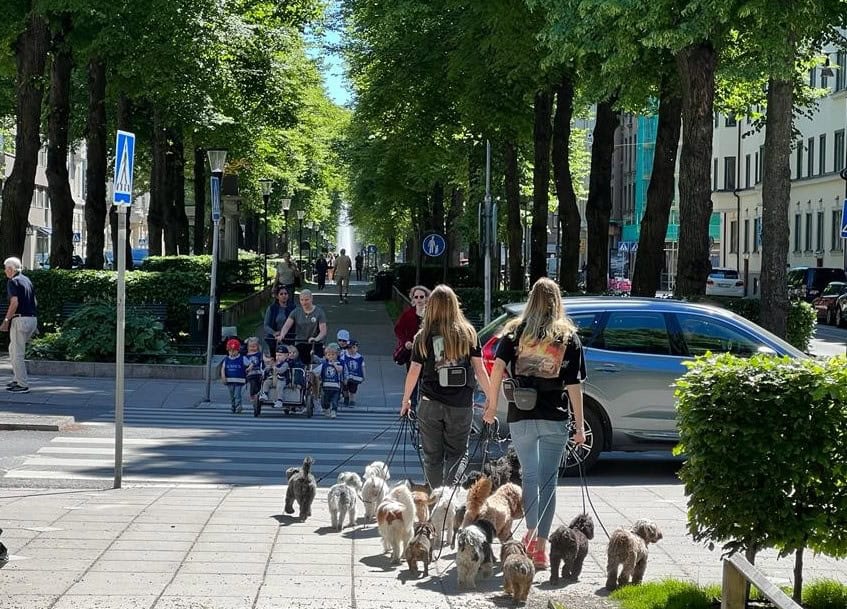
Sweden has experienced substantial immigration over several decades. People have arrived from other Nordic countries, Europe, the Middle East, Africa, Asia and other parts of the world.
According to Statistics Sweden (SCB):
- Sweden had approximately 10.61 million residents at the end of 2025.
- Approximately 2.21 million residents were born abroad, representing 20.8% of the population.
- Approximately 2.94 million people, or 27.7% of the population, had a foreign background. This category includes people born abroad and people born in Sweden with two foreign-born parents.
These figures illustrate the importance of immigration and international cultural connections in Swedish society.
It is important to distinguish between foreign-born residents and people with a foreign background. A person born in Sweden to immigrant parents is included in the latter category but not in the foreign-born population.
Why does this matter for language statistics?
Country of birth does not automatically determine which language someone speaks. Many immigrants are multilingual, and their children may speak Swedish as their first or strongest language while also maintaining their parents’ languages.

2. What Are the Most Common Immigrant Languages in Sweden?
Although Sweden does not publish a definitive nationwide ranking of all languages spoken by its residents, statistics from the Swedish National Agency for Education (Skolverket) provide valuable information.
Mother tongue education statistics are particularly useful because they show which languages are represented among schoolchildren and their families.
The most widely represented languages include:
Arabic
Arabic is one of the most widely spoken immigrant and heritage languages in Sweden. Migration from countries such as Syria, Iraq and Lebanon has contributed to the growth of Arabic-speaking communities.
Arabic is also the largest language in Swedish mother tongue education.
In the 2024/2025 school year, almost 49,000 pupils participated in Arabic mother tongue education.
Arabic is important in public services, healthcare, education, legal communication and commercial translation.
Finnish
Finnish has a special historical position in Sweden. The Finnish-speaking population includes both long-established Sweden Finns and people who have moved to Sweden more recently.
Finnish is one of Sweden’s five officially recognised national minority languages and has protected language rights.
Somali
Somali is another important language in Sweden’s multilingual communities. Somali-speaking residents include immigrants and Swedish-born children of Somali-speaking families.
In the 2024/2025 school year, almost 13,800 pupils participated in Somali mother tongue education.
Somali translation and interpreting are relevant in healthcare, social services, education and communication with public authorities.
Persian (Farsi)
Persian, commonly referred to as Farsi, is spoken by communities with origins particularly in Iran and Afghanistan. Persian-language communication is relevant in education, business, legal services and official documentation.
Kurdish
Kurdish is spoken by communities originating from several countries, including Turkey, Iraq, Iran and Syria.
There are different Kurdish varieties, including Kurmanji and Sorani. When ordering a Kurdish translation or interpreter, specifying the required variety is important.
Bosnian, Croatian and Serbian
These languages are widely represented among people with backgrounds in the former Yugoslavia.
Although Bosnian, Croatian and Serbian are closely related, they have distinct standard forms and linguistic conventions. Professional translation requires attention to the intended audience and language variant.
Polish
Polish is an important European immigrant language in Sweden. Polish-speaking communities include employees, families, students and entrepreneurs.
Demand for Polish translation services is particularly relevant for employment documentation, education certificates, contracts and business communication.
Other languages
Other languages represented in Swedish society include:
The linguistic landscape continues to change as migration patterns, international employment and family reunification influence the population.
3. Statistics: Languages in Swedish Mother Tongue Education
One of the most useful sources for understanding immigrant languages in Sweden is the national school statistics published by Skolverket.
For the 2024/2025 school year:
- Approximately 29% of compulsory-school pupils were eligible for mother tongue education.
- Arabic was the most commonly studied mother tongue, with almost 49,000 participating pupils.
- Somali was the second most common, with almost 13,800 participating pupils.
These figures demonstrate the importance of maintaining linguistic diversity among younger generations.
However, school statistics should not be interpreted as a complete ranking of languages spoken by the entire Swedish population. They reflect pupils participating in a particular educational programme, not all speakers of a language.
Mother tongue education also helps children maintain connections with their family language and cultural background while developing their Swedish language skills.
4. Swedish Language Policy: Is Swedish the Only Official Language?
Swedish is the principal language of Sweden and the common language used in public administration, education and most areas of social life.
The Swedish Language Act (Språklag 2009:600), which entered into force in 2009, establishes the status of Swedish and the responsibilities of public authorities concerning language.
The law also recognises the importance of other languages and protects national minority languages.
The five national minority languages in Sweden

Sweden officially recognises five national minority languages:
- Finnish
- Meänkieli (Tornedalian Finnish)
- Sami
- Romani Chib
- Yiddish
These languages have a long historical presence in Sweden and are protected as part of the country’s cultural heritage.
Public authorities have a particular responsibility to protect and promote these languages.
The Sami people also have the status of an indigenous people in Sweden.
Swedish Sign Language
Swedish Sign Language has a recognised position under the Language Act.
The public sector has a particular responsibility to protect and promote Swedish Sign Language.
What about immigrant languages?
Languages such as Arabic, Somali, Persian, Polish and Spanish are widely spoken in Sweden but do not have the same legal status as the five national minority languages.
Nevertheless, immigrant languages play an important role in everyday communication, education, business and public services.
Sweden’s language policy aims to ensure that Swedish remains the common language while also protecting linguistic diversity and the rights of national minorities.
5. The Right to Mother Tongue Education in Sweden
Sweden has a well-established system of mother tongue education in schools.
Pupils may be entitled to mother tongue tuition if certain conditions are met. Generally, the language must be used regularly in the pupil’s home, and the pupil must have basic knowledge of it.
Special provisions apply to national minority languages.
Mother tongue education supports:
- Children’s linguistic development.
- Communication between generations.
- Cultural identity and family connections.
- Multilingual competence.
- Better opportunities to maintain and develop knowledge of the family language.
Learning Swedish remains essential for integration, further education and employment. Maintaining a mother tongue, however, can also be an important educational and social advantage.
6. Why Are Translation and Interpreting Services Important in Sweden?
Sweden’s multilingual population creates a substantial need for professional translation and interpreting services.
Individuals, companies, public institutions and organisations frequently require communication in languages other than Swedish.
Common translation requirements include:
Immigration and official documents
- Birth certificates.
- Marriage and divorce certificates.
- Passports and identity-related documents.
- Residence and immigration documents.
- Certificates of education and qualifications.
- Court documents and legal decisions.
Business and commercial translation
- Employment contracts.
- Company registration documents.
- Financial reports.
- Commercial agreements.
- Websites and marketing materials.
- Technical documentation.
Healthcare and medical translation
- Medical records.
- Laboratory reports.
- Medical certificates.
- Patient information.
- Pharmaceutical documentation.
Education and academic documents
- Diplomas and degree certificates.
- Academic transcripts.
- School certificates.
- University applications.
- Professional qualification documents.
Professional translation is particularly important when documents must be submitted to Swedish authorities, educational institutions, employers or courts.
Depending on the recipient’s requirements, a certified, authorised or otherwise officially accepted translation may be necessary.
It is always advisable to check the requirements of the institution receiving the document before ordering a translation.
7. Which Languages Does Baltic Media® Translate?
Baltic Media® is an international translation agency and language learning centre specialising in European and international language services.
We provide professional translation and localisation services for private individuals, companies and organisations.
Our services cover a broad range of language combinations, including languages commonly needed in Sweden.
Examples include:
- Swedish–English and English–Swedish.
- Swedish–Arabic and Arabic–Swedish.
- Swedish–Finnish and Finnish–Swedish.
- Swedish–Polish and Polish–Swedish.
- Swedish–Russian and Russian–Swedish.
- Swedish–Somali and Somali–Swedish.
- Swedish–Persian and Persian–Swedish.
- Swedish–Ukrainian and Ukrainian–Swedish.
- Swedish–German and German–Swedish.
- Swedish–Latvian and Latvian–Swedish.
- Swedish–Lithuanian and Lithuanian–Swedish.
- Swedish–Estonian and Estonian–Swedish.
The availability of a specific language combination and type of official translation depends on the document and the required service.
Why choose Baltic Media®?
Baltic Media® offers:
- Professional human translation and localisation.
- Certified and officially accepted translation services, subject to the applicable requirements.
- Legal, medical, technical and business translation.
- Document translation for immigrants and international residents.
- Multilingual website and marketing localisation.
- Translation and interpreting in a wide range of languages.
- Personalised project management and customer support.
With extensive experience in international language services, Baltic Media® helps individuals and businesses overcome language barriers and communicate effectively across borders.
Need a translation in Sweden or from Swedish into another language?
Contact Baltic Media® to request a quotation and find the right translation solution for your documents or business.
Website: https://www.balticmedia.com/
8. Frequently Asked Questions About Immigrant Languages in Sweden
What are the most common immigrant languages in Sweden?
Arabic, Finnish, Somali, Persian, Kurdish, Bosnian, Croatian, Serbian and Polish are among the important immigrant and heritage languages spoken in Sweden. Arabic is the most widely represented language in school mother tongue education.
How many languages are spoken in Sweden?
Estimates suggest that approximately 150–200 languages are spoken in Sweden. However, there is no comprehensive official register of all residents’ mother tongues.
What percentage of Sweden’s population is foreign-born?
At the end of 2025, approximately 20.8% of Sweden’s population was born abroad, according to Statistics Sweden.
What is the second most spoken language in Sweden?
Arabic is often described as the second most common mother tongue after Swedish. However, an exact nationwide ranking is not available from official language statistics.
Is Arabic an official language in Sweden?
No. Arabic is widely spoken but is not an official national minority language. Swedish is the principal language, and the country recognises five national minority languages.
What are Sweden’s five national minority languages?
They are Finnish, Meänkieli, Sami, Romani Chib and Yiddish.
Do immigrant children have the right to learn their mother tongue in Sweden?
Yes, eligible pupils may receive mother tongue education in school, subject to applicable conditions. Special provisions apply to national minority languages.
Does Sweden collect statistics about languages spoken at home?
Sweden does not maintain comprehensive official national statistics covering all residents’ mother tongues. Statistics on country of birth and educational participation provide useful but different indicators of linguistic diversity.
Where can I order a translation in Sweden?
Individuals and businesses can contact professional translation agencies such as Baltic Media® for document translation, legal translation, medical translation, business translation and multilingual localisation.
Conclusion: Sweden Is a Multilingual Society
Immigration has made Sweden a linguistically diverse society where Swedish coexists with many immigrant, heritage and historical minority languages.
Arabic, Finnish, Somali, Persian, Kurdish and Polish are among the languages that contribute to this diversity.
Swedish language policy recognises Swedish as the common language while protecting the country’s five national minority languages and Swedish Sign Language.
For businesses, immigrants and international organisations, this multilingual environment creates a growing need for professional translation, interpreting and localisation services.
Baltic Media® helps individuals and businesses communicate across languages with professional translation and localisation services. Contact us for a quotation.
Website: https://www.balticmedia.com/
Sources and Further Reading
- Statistics Sweden (SCB) – Population statistics: https://www.scb.se/en/finding-statistics/statistics-by-subject-area/population-and-living-conditions/population-composition-and-development/population-statistics/
- Swedish National Agency for Education (Skolverket) – School statistics: https://www.skolverket.se/
- Government Offices of Sweden – National minorities and minority languages: https://www.government.se/government-policy/national-minorities-and-minority-languages/
- Swedish Language Act (2009:600): https://www.government.se/contentassets/16ba706f40854a87b910941caf3891d1/language-act-in-english.pdf
- Sveriges Riksdag – Information in other languages: https://www.riksdagen.se/en/about-the-website/other-languages/