While Artificial Intelligence (AI) and Machine Translation (MT) have made massive leaps in speed and volume, the global business landscape still relies heavily on multilingual human translation services.
The core reason is simple: AI processes words, but humans translate meaning, culture, and intent. For high-stakes content—like financial audits, legal contracts, or brand marketing campaigns—the gap between a literal translation and a culturally accurate one is the difference between commercial success and a costly legal or reputational misstep.
To meet client demands, translation services have become exceedingly crucial, especially for small to medium-sized businesses. With over 30 years in the industry, Baltic Media offers the resources to translate any document into any EU language, helping companies expand.
Our team of experienced linguists is skilled in transcreation, allowing the creative adaptation of the message to resonate with the target audience. Let’s take a look at some benefits that Baltic Media’s Global Reach offers for SMBs.
1. Cultural Nuance and “Localization”
A literal, word-for-word translation can often fall flat, or worse, offend. Human translators excel at localization—the process of adapting a message to align perfectly with the local culture, societal norms, humor, and idiomatic expressions of the target audience.
-
Idioms and Metaphors: AI frequently stumbles on regional expressions. A human knows that a phrase like “beating around the bush” requires a completely different conceptual equivalent in Swedish or Latvian to make sense.
-
Brand Image: Slogans and marketing copy rely heavily on emotional resonance. Human linguists ensure the brand’s tone, voice, and intent remain intact across borders.
2. Technical, Legal, and Financial Accuracy
In highly regulated sectors, absolute precision is mandatory. A minor translation error in a financial statement, annual report, or medical patent can lead to regulatory rejection or lawsuits.
-
Industry Expertise: Professional human translators are frequently subject-matter experts (SMEs) in specific fields, such as international law, medicine, or corporate finance. They understand the exact regulatory terminology required by specific local jurisdictions.
-
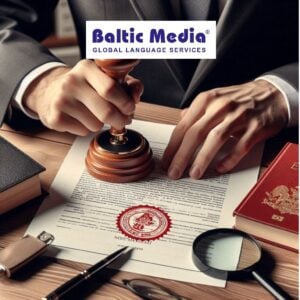
Accountability: Certified and authorized translations—often required by government bodies and courts—demand a human signature and stamp to verify legal validity. AI cannot provide legal accountability.
3. Managing the Limitations of AI
Modern translation strategies often use a hybrid approach known as MTPE (Machine Translation Post-Editing), where AI handles the initial bulk processing and a professional human editor refines the output. However, relying purely on raw AI presents distinct risks:
-
Hallucinations and Blind Spots: AI can confidently generate factually incorrect phrasing or omit critical sentences if it misinterprets complex linguistic syntax.
-
Data Privacy: Inputting confidential corporate documents, unreleased financial reports, or sensitive legal files into public AI tools can violate data protection laws (like GDPR) and compromise intellectual property. Professional human translation agencies operate under strict Non-Disclosure Agreements (NDAs) and secure, localized workflows.
Human vs. Machine Translation at a Glance
| Attribute | Pure Machine Translation (AI) | Professional Human Translation |
| Speed & Volume | Instant; millions of words per minute | Scaled by team size; averages 2,000–2,500 words/day per linguist |
| Contextual Awareness | Low to Moderate; struggles with deep irony, brand voice, and complex syntax | High; understands target demographics, regional slang, and subtext |
| Industry Compliance | Unreliable for certified legal, medical, or financial filing | High; meets strict regulatory standards (e.g., ISO translation quality standards) |
| Data Security | Variable; public models risk data leakage | High; protected by secure infrastructure, closed servers, and legal NDAs |
Why Use Multilingual Translation Services?
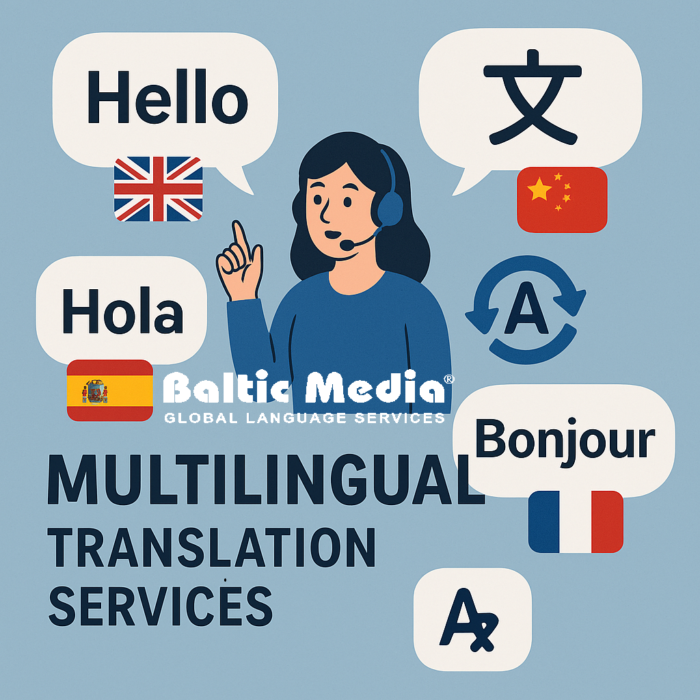
Multilingual translation services are crucial for offering a unique service to your target audience and staying ahead of your competitors. Let’s explore why translation services encourage sustainable business practices:
• Create a Value Proposition
As the digital landscape continues to expand, it is high time businesses kept pace with client demands and provided excellent service to stay ahead of competitors.
Translating your services into multiple languages helps you boost sales and reach audiences across different EU countries by demonstrating value compared to others in your niche.
• Increase SERP Rankings
Ranking high on search engines is what every business needs. And hosting a multilingual platform helps build your search engine optimization (SEO) score and enables you to rank high in search engines like Google and Bing.
Several countries in the EU prefer their language-based search engines. So, a multilingual service can effectively help convert your content into a different EU language and give an effective advantage in terms of SEO.
• Work With Skilled Translators
At Baltic Media, our translators have a variety of qualifications, from masters to PhDs in specific industries and decades of experience. This enables them to understand the nuances of your content and translate expressions without losing meaning.
They translate for businesses looking to translate media texts, legal, subtitles, and even webshop text.

Plus, our skilled translators retain your content’s nuances and deep meanings, making it more engaging, precise, and meaningful. This allows you to communicate your message to your target audience effectively.
Baltic Media also provides industry-specific translation services, including legal, medical, and technical translation. We offer document translation, interpretation, website translation, localization, transcreation, and more, designed to meet clients’ specific needs.